

 English
 Español
 Portugues
 Pусский
 العربية
 中文


Сосредоточение внимания на подземном некавальном технике инженерии


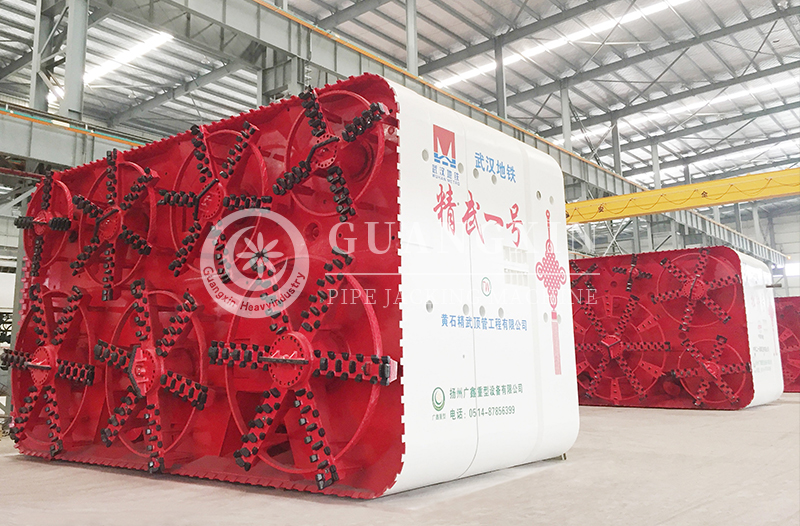
Pipe jacking is a trenchless construction method widely used for installing underground pipelines, ducts, and tunnels without the need for extensive surface excavation. Among the various types of pipe jacking machines, rectangular and circular designs are the two most common configurations. While both serve the fundamental purpose of underground tunnel construction, they differ significantly in design philosophy, structural mechanics, space utilization, construction efficiency, and application scenarios. Understanding these differences is essential for engineers and project managers to select the most appropriate technology for specific underground infrastructure projects.
Fundamental Design and Structural Differences
Shape and Cross-Sectional Geometry
The most obvious difference between rectangular and circular pipe jacking machines lies in the shape of the cross-section they produce. Circular pipe jacking machines create round tunnels, which have been the traditional standard in underground construction for decades. This circular shape provides inherent structural advantages, as the continuous curvature distributes forces uniformly around the circumference, making circular pipes naturally strong and capable of withstanding high internal and external pressures.
Rectangular pipe jacking machines, by contrast, produce rectangular or box-shaped tunnels. This design is specifically tailored to meet the needs of projects that require larger cross-sectional areas or specific spatial layouts. The rectangular shape is not naturally as strong as the circular shape under uniform pressure, and may require additional reinforcement to maintain structural integrity, especially in soft or unstable soil conditions.
Cutterhead Configuration
The cutterhead system represents another fundamental design difference. Circular pipe jacking machines typically employ a single large rotating cutterhead that matches the circular cross-section. This simple design has been refined over decades and is highly reliable for most geological conditions.
Rectangular pipe jacking machines, however, require a more complex cutterhead arrangement. Since a single rotating cutterhead cannot cover the corners of a rectangular cross-section, multiple cutterheads are arranged in a pattern to ensure complete coverage of the entire rectangular face. These multiple cutterheads are often offset from each other to improve excavation coverage and effectively solve the challenge of full-section rectangular excavation. The cutterhead structure is designed to be symmetrical, ensuring uniform force distribution and minimal disturbance to the surrounding soil.
Space Utilization Efficiency
Cross-Sectional Area Utilization
One of the most significant advantages of rectangular pipe jacking is its superior space utilization efficiency. Under the premise of the same effective space, the rectangular pipe section can save more than one third of the underground space compared with the circular pipe section. This means that for the same usable internal area, a rectangular tunnel requires less excavation volume and occupies less underground space.
More specifically, the rectangular cross-sectional increases the effective usable area by more than 20% compared to a circular cross-sectional of similar dimensions. This is because the circular shape inherently leaves unused space at the top and bottom corners when used for applications that require a rectangular interior space, such as pedestrian passages or utility tunnels.
Tunnel Depth and Overburden
The rectangular shape also offers advantages in terms of tunnel depth. Because the rectangular cross-sectional can be designed with a lower height for a given width, the rectangular pipe section can greatly reduce the tunnel depth and increase the thickness of the overlying soil layer. This is particularly beneficial in urban environments where shallow tunnels are needed to avoid deeper utilities or geological obstacles.
Structural Mechanics and Force Distribution
Soil Pressure Distribution
The force distribution on circular and rectangular pipe sections differs fundamentally. For circular pipe sections, the soil pressure distribution is continuous and uniform around the circumference. The actual buried depth gradually increases from the top to the side of the pipe section, resulting in a gradual function of soil pressure. The lateral pressure is similarly a gradual function of the calculated point position.
For rectangular pipe sections, the force state is different. The soil pressure on the upper and lower parts of the rectangular section remains constant across the flat surfaces, while the lateral soil pressure from the top to the side of the pipe section follows a trapezoidal distribution. This difference in pressure distribution affects the structural design requirements and the reinforcement needed for the pipe sections.
Pipe-Soil Frictional Resistance
The pipe-soil frictional resistance is a critical factor in pipe jacking design, as it often consumes most of the jacking force during construction. The calculation of frictional resistance differs between circular and rectangular sections due to their different geometries and pressure distributions.
For circular sections, the frictional resistance can be calculated using equations that account for the uniform circumferential pressure distribution. For rectangular sections, the calculation must consider the flat surfaces and the different pressure distributions on the top, bottom, and side walls. This difference in frictional behavior affects the required jacking force and the design of the thrust system.
Construction Efficiency and Operational Characteristics
Excavation Speed
Rectangular pipe jacking machines are generally more efficient than circular ones in terms of construction speed. This is because rectangular pipe jacking machines have a larger working area and can lay more pipe material at one time. Circular pipe jacking machines, on the other hand, need to be laid section by section when installing pipes, resulting in relatively lower construction efficiency.
Thrust Mechanism
The thrust mechanism differs between the two types. Circular pipe jacking machines typically use a hydraulic thrust system that applies force uniformly around the circumference of the pipe, helping maintain stability during the jacking process. Rectangular pipe jacking machines often employ a more complex thrust mechanism to accommodate the flat sides of the rectangular pipes, which may involve multiple hydraulic rams positioned at strategic points to ensure even distribution of thrust.
Steering and Alignment Control
Rectangular pipe jacking machines face greater challenges in steering and alignment control compared to circular machines. The rectangular shape is more susceptible to rotation during jacking, requiring more sophisticated control systems to maintain the correct orientation. The deviation correcting capability of rectangular machines is typically more limited, with minimum curvature radius usually ranging from 80 to 100 meters, which is more demanding than circular machines.
Application Scenarios and Suitability
Geological Adaptability
Circular pipe jacking machines have been refined over decades and can handle a wide range of geological conditions, from soft clay to hard rock. The technology is well-established and reliable across most soil types.
Rectangular pipe jacking machines have also demonstrated good geological adaptability. They are suitable for most geological conditions, including silt, soft soil, sand, gravel, sand pebble, and soft rock. However, they may face greater challenges in certain conditions, such as strata with single-axis compressive strength greater than 5MPa, strongly weathered granite spherical soil layers, or gravel layers with particle sizes exceeding 200mm.
Urban Environment Applications
Rectangular pipe jacking machines are particularly well-suited for urban environments where space is constrained and surface disruption must be minimized. The rectangular shape allows for more efficient use of underground space, which is especially valuable in congested city centers with existing underground utilities. The equipment requires smaller working shafts compared to circular machines, making it more adaptable to confined urban construction sites.
Rectangular pipe jacking machines are primarily used for underground passages, utility tunnels, and other underground space construction. They are particularly suitable for applications such as subway entrances, underground pedestrian crossings, and comprehensive utility corridors. Circular pipe jacking machines, in contrast, are more versatile and can be used in a wider range of applications, from small-diameter utility lines to large-diameter transportation tunnels.
Economic Considerations
Equipment Cost
The cost of rectangular pipe jacking machines is generally higher than that of circular ones. This is because rectangular machines have higher requirements in design and manufacturing, with more complex cutterhead systems and thrust mechanisms. The equipment cost for small and medium-sized rectangular machines typically ranges from 2 to 4 million RMB, while large machines can cost over 8 million RMB.
Overall Project Cost
Despite higher equipment costs, rectangular pipe jacking can offer overall project cost savings in certain applications. The rectangular cross-section can reduce tunnel construction costs by approximately 20% compared to circular sections for equivalent usable space, as it eliminates the need for additional ground leveling and backfilling. The reduced excavation volume and smaller working shaft requirements also contribute to overall cost savings.
Resource Utilization
Rectangular pipe jacking machines offer unique advantages in resource utilization. For example, the drive mechanisms of the multiple cutterheads on a rectangular machine can be recycle and reuse after completing a project, potentially manufacturing multiple smaller diameter circular shield machines from the same components. This enhances resource utilization efficiency and promotes sustainable construction practices.
Rectangular and circular pipe jacking machines each have distinct characteristics that make them suitable for different applications. Circular pipe jacking machines offer proven technology, excellent structural strength, and wide geological adaptability. Rectangular pipe jacking machines provide superior space utilization efficiency, reduced excavation volume, and better adaptability to urban environments with constrained space. The choice between the two depends on project-specific requirements, including the desired tunnel shape, available underground space, geological conditions, and economic considerations. As urban underground space development continues to expand, rectangular pipe jacking technology is expected to play an increasingly important role in modern infrastructure construction, particularly for applications such as utility tunnels, pedestrian passages, and subway-related structures.
Адрес:
Нет.
Электронная почта:
gxgs@163.com
Телефон компании :
+86-136 6520 7888 / +86-138 0527 1538
URL:
www.guangxinglobal.com


Copyright © Yangzhou Guangxin Heavy Industry Co., Ltd. | Все права защищены


Комментарий
(0)