

 English
 Español
 Portugues
 Pусский
 العربية
 中文


Сосредоточение внимания на подземном некавальном технике инженерии


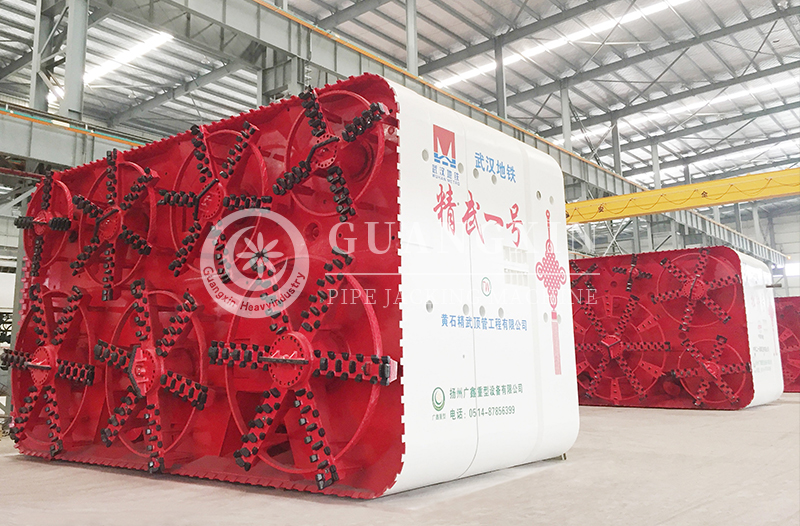
Ground settlement is one of the most critical concerns in underground construction, particularly in urban environments where surface structures, roadways, and buried utilities are densely concentrated. The ability to control and minimize ground deformation is a defining advantage of the rectangular pipe jacking machine. This technology, through a combination of mechanical design, process control, and auxiliary techniques, can significantly reduce ground settlement compared to traditional open-cut methods and even some circular tunneling techniques. The mechanisms by which rectangular pipe jacking machines achieve this are multifaceted and involve precise management of earth pressure, effective lubrication, optimized construction parameters, and specialized equipment design.
1. Earth Pressure Balance Control
The most fundamental mechanism for settlement control in rectangular pipe jacking is the earth pressure balance system. Unlike open-face excavation methods, modern rectangular pipe jacking machines are typically equipped with a closed-face earth pressure balance system that actively maintains the stability of the excavation face. This system works by controlling the pressure within the soil chamber to match the earth and water pressure in front of the excavation face. When the soil chamber pressure is properly balanced with the ground pressure, the excavation face remains stable, and there is minimal movement of soil into or away from the face.
Research has shown that the thrust force should be slightly greater than one times the central earth pressure of the face to effectively inhibit ground settlement. The key parameter is the soil chamber pressure, which must be dynamically adjusted based on real-time monitoring data to compensate for variations in ground conditions, depth, and overburden. By maintaining the appropriate balance, the machine prevents both excessive soil loss that leads to settlement and excessive soil compression that could cause surface heave.
2. Grouting Pressure and Lubrication Control
The injection of lubricating grout, typically bentonite-based thixotropic mud, plays a dual role in settlement reduction. First, the grout fills the annular void that is created between the rectangular pipe section and the surrounding soil as the machine advances. This void, if left unfilled, would be a direct cause of ground loss and subsequent settlement. Second, the grout reduces the friction between the pipe and the soil, which allows for smoother advancement with less disturbance to the surrounding ground.
Research indicates that grouting pressure should be controlled within two times the overlying soil pressure. The combined application of anti-back soil design, pipe joint wax coating, thixotropic mud, slag improvement, and grouting friction reduction has been demonstrated to have a significant effect on reducing soil disturbance and settlement control for large-section pipe jacking. The grout forms a continuous mud sheath around the rectangular pipe, which not only reduces friction but also stabilizes the soil-pipe interface and prevents the migration of soil particles into the void.
3. Control of Excavation Volume and Face Stability
Precise control of the excavation volume is essential for minimizing ground settlement. The rectangular pipe jacking machine must remove soil at a rate that exactly matches the volume of the pipe section being installed. Over-excavation, where more soil is removed than the volume of the pipe, creates a void that inevitably leads to surface settlement. Conversely, under-excavation can cause excessive friction and ground heave.
The machine's ability to control the rate of soil removal through the screw conveyor or slurry system, combined with the real-time monitoring of the soil chamber pressure, ensures that the excavation volume is precisely matched to the advancement rate. The machine head and pipe sections are integrated into a continuous system, and the volume of excavated soil is carefully controlled to prevent the machine head from diving or rising, which could cause localized ground deformation.
4. Synchronous Grouting and Backfill Grouting
Synchronous grouting is a critical technique in rectangular pipe jacking construction. As the machine advances, grout is simultaneously injected through ports located on the tail of the machine or on the pipe sections themselves. This ensures that the annular void is filled immediately as it is created, preventing the collapse of soil into the void and the associated settlement.
In addition to synchronous grouting, supplementary backfill grouting can be performed after the machine has passed. This is particularly important in areas where the initial grouting may not have completely filled the void, or where ground conditions are especially challenging. The combination of synchronous and supplementary grouting provides a robust barrier against ground loss and settlement.
5. Optimization of Jacking Speed and Process Parameters
The speed at which the rectangular pipe jacking machine advances is a critical factor in settlement control. If the machine advances too quickly, the soil may not have sufficient time to adjust to the changing stress conditions, leading to instability and potential collapse. If it advances too slowly, the friction between the pipe and the soil may increase, causing additional disturbance.
Research has shown that controlling the jacking speed and regulating the volume of excavated soil are effective measures for controlling stratum settlement. The optimal jacking speed depends on the ground conditions, the depth of the tunnel, and the geometry of the rectangular section. By carefully adjusting the jacking speed, the machine can maintain a stable excavation face and minimize the zone of soil disturbance.
6. Strata Reinforcement and Ground Treatment
Before the rectangular pipe jacking machine begins its drive, the soil at the launching and receiving ends can be reinforced to improve its stability and reduce the potential for settlement. Common methods include high-pressure jet grouting piles, which improve the strength and impermeability of the soil in the immediate vicinity of the machine. This reinforcement creates a stable zone that helps to control settlement during the initial and final stages of the jacking process.
Ground treatment measures, such as soil improvement through the injection of stabilizing agents, can also be applied along the entire length of the drive to improve the soil's mechanical properties and reduce its susceptibility to disturbance. These measures work in concert with the earth pressure balance system to provide comprehensive settlement control.
7. Real-Time Monitoring and Feedback Control
Modern rectangular pipe jacking machines are equipped with extensive monitoring systems that provide real-time data on key parameters, including soil chamber pressure, jacking force, grouting pressure, and surface deformation. This data is fed into a control system that can automatically adjust the machine's operating parameters to maintain optimal conditions.
The ability to monitor surface settlement in real time allows the operator to identify any developing trends and take corrective action before significant settlement occurs. This feedback loop is essential for ensuring that the machine remains within the tolerance limits for ground deformation. Research on the Beijing first rectangular pipe jacking tunnel demonstrated that by monitoring settlement data, the optimal excavating parameters and the settlement law caused by the rectangular pipe jacking could be obtained, enabling effective control.
8. Specialized Equipment Design Features
The design of the rectangular pipe jacking machine itself contributes to settlement reduction. The machine's cutting head and body are designed to minimize the overcut, which is the gap between the machine's outer dimensions and the pipe section. A smaller overcut means less annular void to fill with grout and less potential for ground loss.
The stiffness of the rectangular pipe section is also an important factor. Research has shown that by reasonably arranging the reinforced concrete middle partition wall of the pipe jacking segment, the rigidity of the rectangular pipe jacking roof can be increased, which reduces the deformation of the overlying soil on the roof. This structural optimization helps to maintain the integrity of the tunnel and minimize the transfer of deformation to the surface.
The rectangular pipe jacking machine reduces ground settlement through a comprehensive and integrated system of earth pressure balance control, precise grouting and lubrication, strict control of excavation volume, synchronous and supplementary grouting, optimization of jacking speed and process parameters, ground reinforcement, real-time monitoring and feedback control, and specialized equipment design. These mechanisms work together to ensure that the ground is minimally disturbed during the construction process, and that any void created by the excavation is immediately filled and stabilized. The result is a construction method that can achieve surface settlement control within the range of ±10 to 25 mm, even in complex urban environments with sensitive surface structures and buried utilities. This makes rectangular pipe jacking an indispensable technology for modern underground infrastructure development in densely populated urban areas.
Адрес:
Нет.
Электронная почта:
gxgs@163.com
Телефон компании :
+86-136 6520 7888 / +86-138 0527 1538
URL:
www.guangxinglobal.com


Copyright © Yangzhou Guangxin Heavy Industry Co., Ltd. | Все права защищены


Комментарий
(0)